Take action
Ed Miliband
Foreign Secretary
Thank you for contacting about this important issue.
Please share this campaign with your friends and family.
Download and share these resources on Al-Aqsa mosque.
Please select resource type below
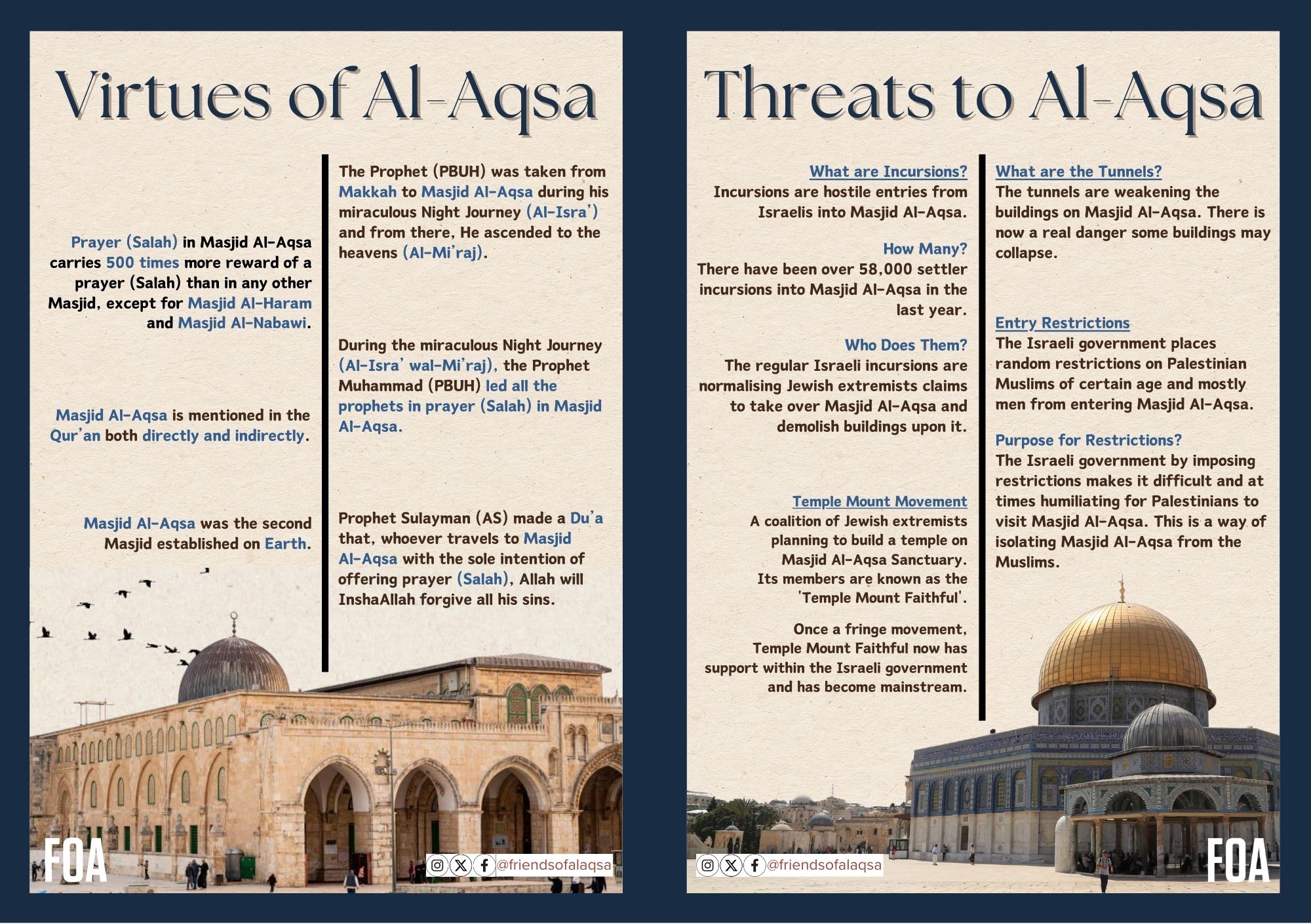
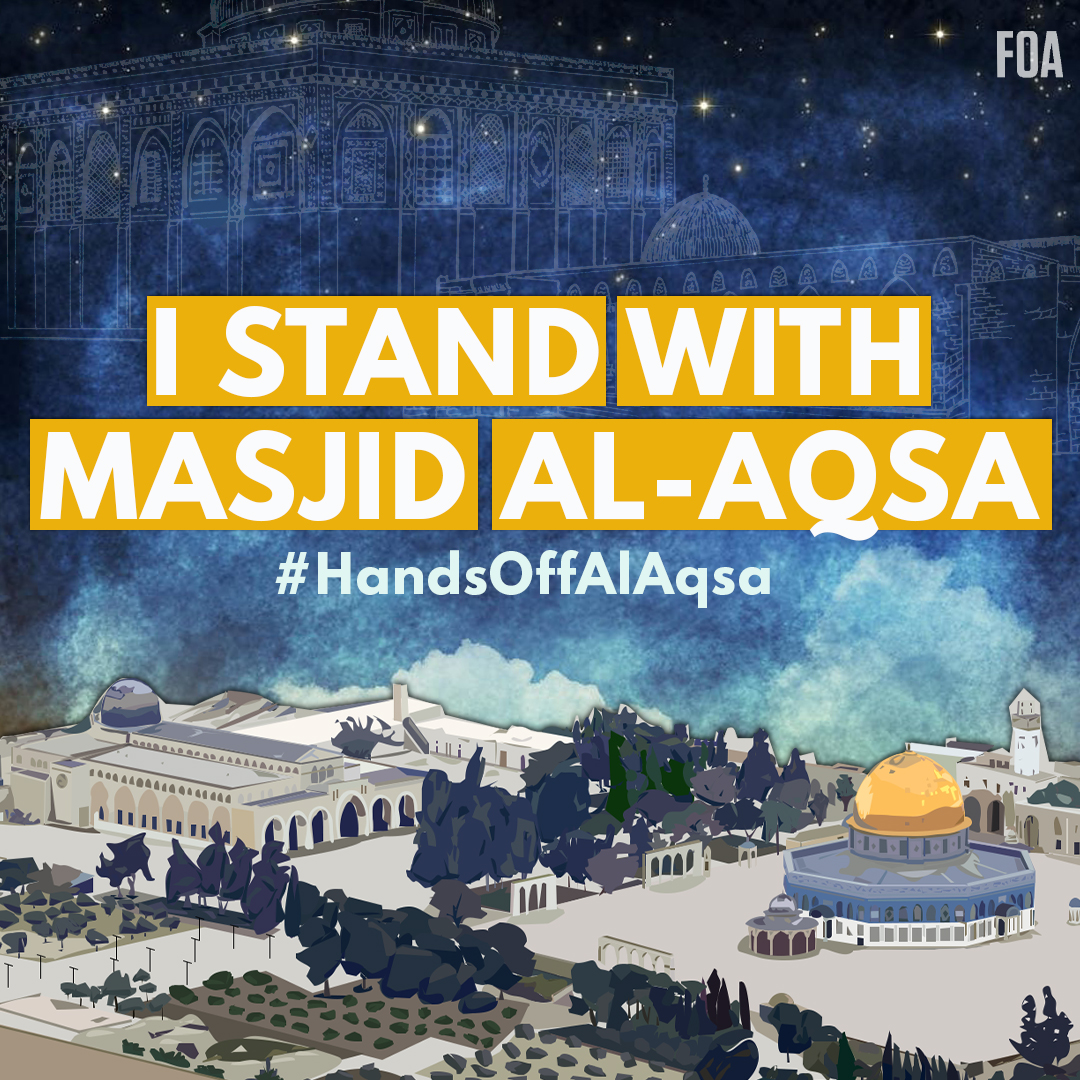
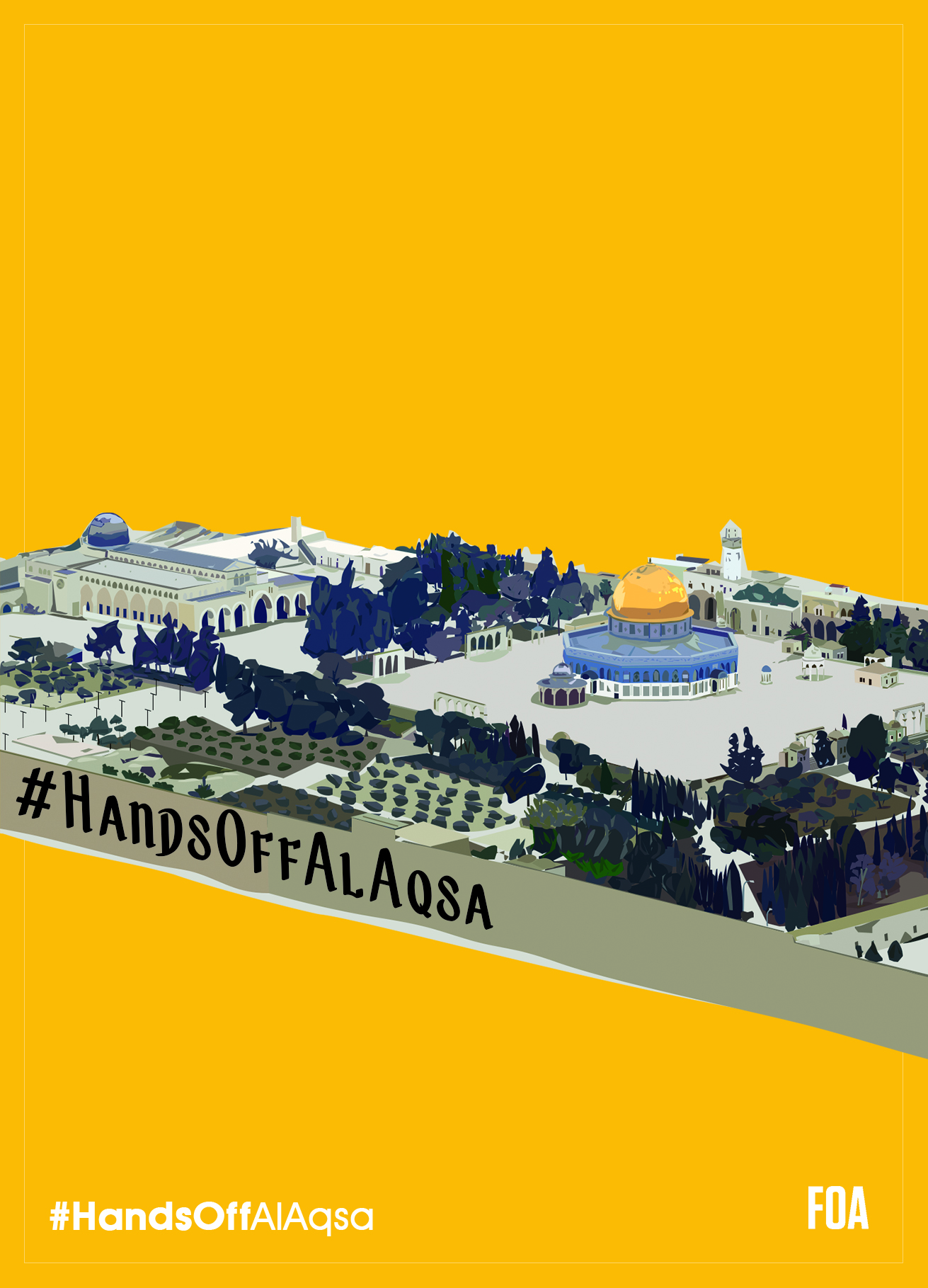
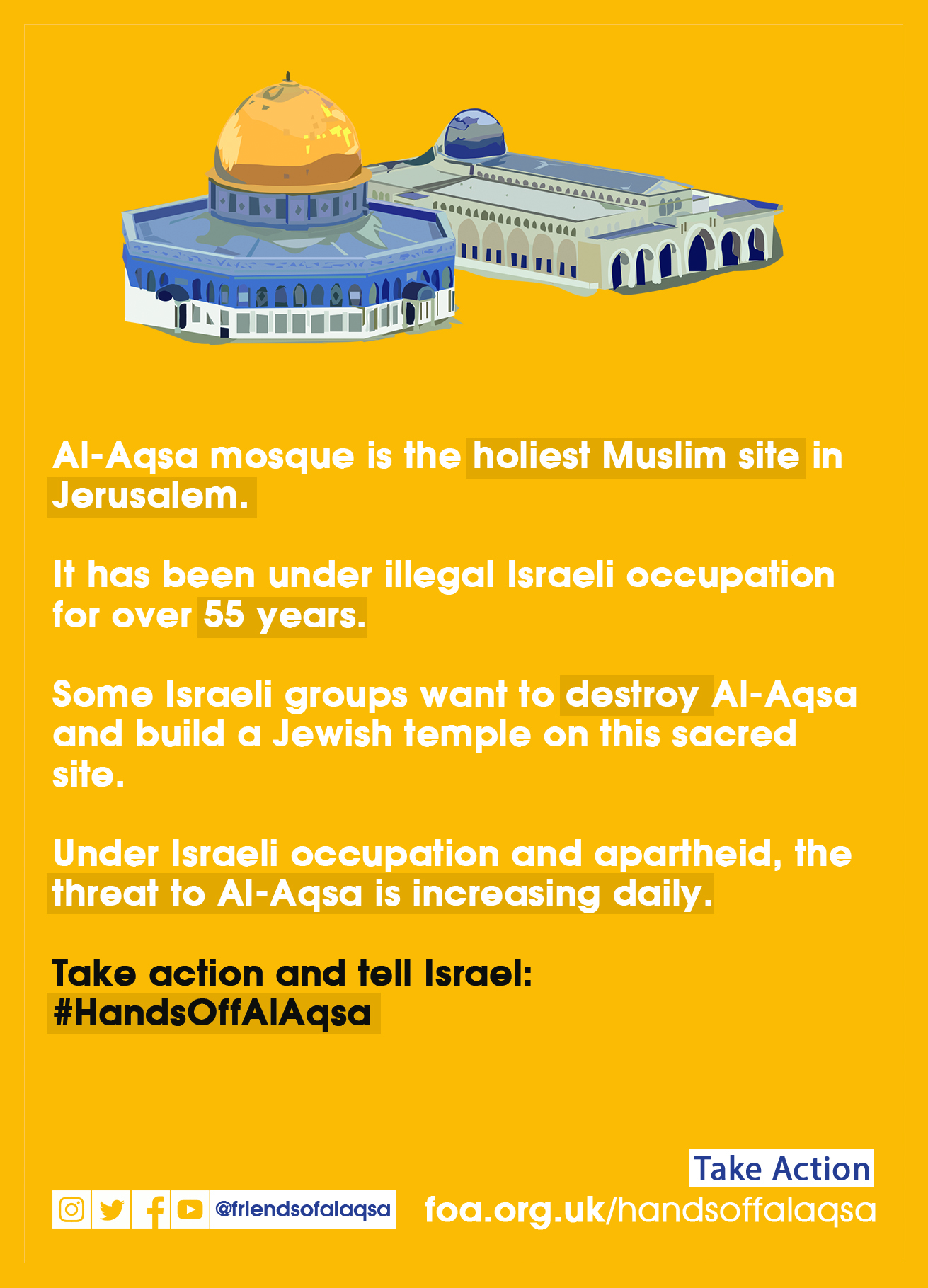
Distribute free #HandsOffAlAqsa info cards outside your local mosque or at your university isoc events to help raise awareness of the campaign. Order now.
Manar Dabbas
Jordanian Ambassador
Thank you for contacting about this important issue.
Please share this campaign with your friends and family.
Here are frequently asked questions on #HandsOffAlAqsa
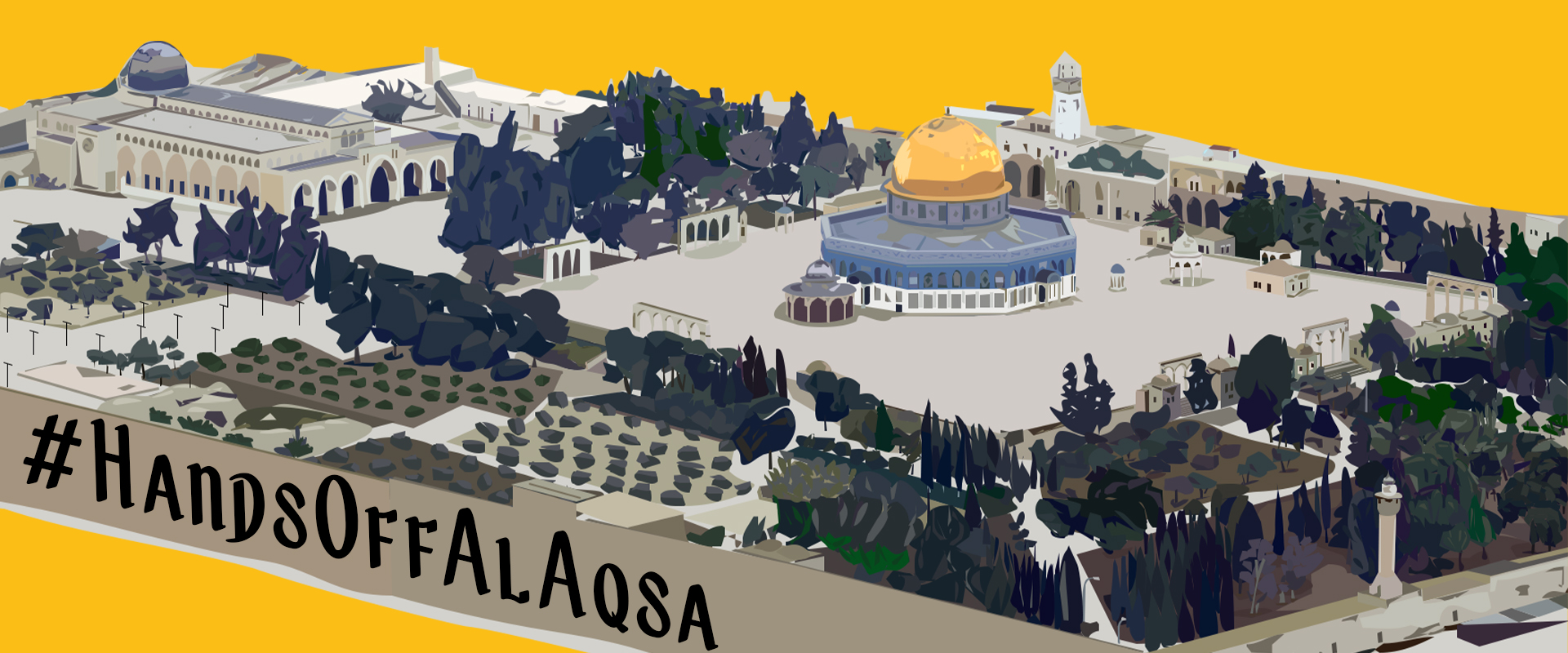
Al-Aqsa is a holy sanctuary in the Old City of Jerusalem, also known as Masjid Al-Aqsa or the Noble Sanctuary. The entire compound including the land and buildings is sacred, with ‘Masjid al-Aqsa’ referring to all the buildings there.
This sacred site spans approximately 35 acres. Al-Aqsa houses roughly 200 buildings, monuments and courtyards of historical and religious significance. This includes the Dome of the Rock (Qubbat as Sukhra, the golden-domed building) and Musallah Al-Qibly (the grey-domed building).
These buildings have extraordinary historical significance for Muslims. Al-Aqsa is the third holiest site in Islam and the place where Muslims believe the Prophet Muhammed ascended to heaven. It is the holiest site in Jerusalem for Muslims and a very important symbol of Palestinian nationhood and culture.
When the second Caliph ‘Umar entered Jerusalem he requested that he first be taken to al-Haram al-Sharif, the place of Al-Aqsa. He ordered the construction of a masjid (mosque) at the southern end of the sanctuary. This was originally a wooden structure but was later re-built as a solid structure.
Israel illegally occupied East Jerusalem, including Al-Aqsa in the Old City, in 1967. In 1980 Israel announced the Jerusalem Law, illegally annexing East Jerusalem. Israel’s annexation of East Jerusalem violates international law.
Since then, entry and exit to Al-Aqsa has been under Israeli control. Palestinian access to the holy site is restricted whilst Israel allows increasing numbers of Israeli groups to visit and pray at Al-Aqsa, accompanied by Israeli Occupation Forces. These visits are known as incursions.
There is now a mainstream movement within Israel to destroy Al-Aqsa and replace it with a Jewish temple. This movement even has the backing of the Israeli government.
The Israeli government frequently allows Israeli groups to visit Al-Aqsa, accompanied by Israeli Occupation Forces. 48,000 Israeli settlers stormed Al-Aqsa in 2022 – more than any year previously.
Attacks on Palestinian worshippers are increasing, particularly during the holy month of Ramadan. In 2021 Israeli Occupation Forces violently assaulted Palestinian worshippers. In 2022 Israeli forces brutally attacked Palestinian worshippers of all ages with tear gas, sound grenades and rubber-coated steel bullets. Over 250 worshippers were injured and there was significant damage to historic buildings within the compound, including the stained-glass windows of Al-Aqsa.
You can take action to protect Al-Aqsa mosque today:
Tweet out your solidarity and support for Al-Aqsa using the Tweet tab.
Share the 'I Stand With Masjid Al-Aqsa' image on your socials from the Resources tab.
Get involved with Aqsa Week 2024 (Monday 5th Feb – Sunday 11th Feb)
More info:
/news/2022/4/20/timeline-raids-closures-and-restrictions-on-al-aqsa
https://www.middleeasteye.net/news/israel-palestine-aqsa-mosque-raids-incursions-explained
/20230401-temple-mount-groups-pledge-prizes-for-animal-sacrifice-at-al-aqsa-mosque/
Story so far.
The Struggle for Al-Aqsa: A New Threat to Muslim Custodianship
Updated August 2026
Recent reports indicate that the United States and Israel are discussing plans that could fundamentally alter the status of Masjid Al-Aqsa by removing Jordan's custodianship and replacing it with a new administrative arrangement.
For Muslims around the world, this is not simply a diplomatic dispute. It represents one of the most serious threats to Al-Aqsa in decades.
The issue is no longer merely who can enter Al-Aqsa. It is increasingly about who governs the sanctuary, who protects its Islamic character, and who decides its future.
On 5 August, Jordan convened an emergency meeting of ministers from across the Arab and Islamic world, warning that Masjid Al-Aqsa faces an ‘imminent threat of Israeli takeover’ which could ‘trigger a religious conflict’. More direct challenges to Jordanian custodianship are expected during the major Jewish holidays In September which coincide with the election campaign in Israel.
What is Jordanian Custodianship?
Jordan's custodianship refers to its recognised role in safeguarding and overseeing the Islamic holy sites in Jerusalem through the Jordanian Islamic Waqf.
The Waqf administers Masjid Al-Aqsa, maintains its buildings, appoints staff and preserves its exclusively Islamic character.
While custodianship does not end the occupation of Jerusalem, it remains one of the last internationally recognised barriers preventing Israel from exercising complete control over the sanctuary.
Why is Custodianship Under Threat?
For years, Israel, settler organisations and Temple Mount Movement groups have sought to weaken the authority of the Islamic Waqf.
Recent reports suggest that discussions are now taking place to replace Jordan's role with an alternative framework which would see administrative controlled stripped from Jordan and handed to Israel.
Such a move would represent a historic shift in the governance of Al-Aqsa.
Why Does Custodianship Matter?
To understand why this matters, it is important to examine what has already been happening at Al-Aqsa.
Settler Incursions Continue to Expand
Settler incursions into Al-Aqsa began in 2003.
In 2008, fixed daily incursion periods were introduced, granting settlers approximately three hours per day inside the sanctuary.
By 2026, this had expanded to approximately six and a half hours daily.
The number of settler incursions has also risen dramatically:
• 2022: More than 48,000 incursions
• 2024: 53,488 incursions
• 2025: More than 65,000 incursions
• January 2026 alone: 4,397 settler entries, alongside 7,868 entries recorded as "tourism".
• On 23 July, more than 4200 Israelis, led by National Security Minister, Itamar Ben Gvir, stormed Masjid Al-Aqsa. On a social media post he stated Jews praying there ‘feel like the owners’.
These incursions are carried out under armed police protection and have become a central tool for altering realities on the ground.
Restrictions on Palestinian Worshippers
While settler access has increased, Palestinian worshippers continue to face growing restrictions, including:
• Age-based entry bans
• Permit requirements
• Gender-based restrictions
• Arbitrary closures
• Severe limitations during Ramadan and religious holidays
In recent years Israeli forces have repeatedly entered Al-Aqsa during Ramadan and used force against worshippers.
The result is a dual system in which settler access expands while Muslim worship becomes increasingly restricted.
Calls for Israeli Sovereignty
The ambitions behind these policies are not hidden.
National Security Minister Itamar Ben Gvir has repeatedly entered Al-Aqsa and openly advocates increased Israeli control over the site. During one such incursion in April 2026, he declared: “Today, I feel like the owner of the place here,”
Finance Minister Bezalel Smotrich has called for Israeli sovereignty over the occupied Palestinian territories and supports policies that undermine Palestinian rights in Jerusalem.
The concern is not merely the actions of individual politicians, but the direction of travel: increasing Israeli authority and decreasing Islamic administration.
The Temple Mount Movement
Alongside government ministers are organisations commonly referred to as the Temple Mount Movement.
These groups openly advocate replacing Islamic administration at Al-Aqsa with full Israeli control.
Many campaign for the destruction of current prayer spaces in Masjid Al-Aqsa and the construction of a Third Temple on the site.
Yehuda Glick, one of the movement's most prominent figures, built his public profile around demands for expanded Jewish access and sovereignty over the compound.
The Ramadan Closure of 2026
The threat to custodianship must also be viewed in the context of recent events.
On 28 February 2026, Israeli forces closed Masjid Al-Aqsa during Ramadan, preventing worshippers from accessing Islam's third holiest site.
The closure lasted forty days, covering most of Ramadan, Eid and five Fridays.
When Al-Aqsa reopened in April, it did so under Israeli-imposed conditions and alongside renewed settler incursions.
The closure demonstrated a troubling reality: decisions affecting Al-Aqsa are increasingly being made by Israeli authorities rather than by the Islamic Waqf.
A Trajectory Towards Takeover
Settler incursions, worship restrictions, Ramadan closures and Temple Movement activity are all part of a broader pattern.
The gradual expansion of settler access.
The restriction of Palestinian worship.
The growing role of Israeli courts and government ministries.
The weakening of the Islamic Waqf.
And now discussions about removing Jordanian custodianship.
Each development moves Al-Aqsa further away from independent Islamic administration and closer towards full Israeli control.
Take Action
Ask your masjid to dedicate their Jumuah Khutba to the threats facing Masjid Al-Aqsa. Khutba points can be found here: https://www.foa.org.uk/assets/campaign/resources/threat-to-al-aqsa-khutba-14-august-2026.pdf
Email the Foreign Secretary and ask him to:
Call for the protection of the historic and legal status quo at Masjid Al-Aqsa.
Ensure the UK works to protect the Jordanian Waqf's custodianship of Masjid Al-Aqsa.
Demand that the Israeli government ends all incursions into Masjid Al-Aqsa.
Email the Jordanian Embassy
Politely ask the Jordanian Embassy:
• To publicly reject any proposal to remove or dilute Jordan's custodianship of Al-Aqsa.
• To explain what steps Jordan is taking to defend the authority of the Islamic Waqf.
• To use all available diplomatic and legal avenues to preserve Al-Aqsa's historic status.
Other links & resources

.png)